
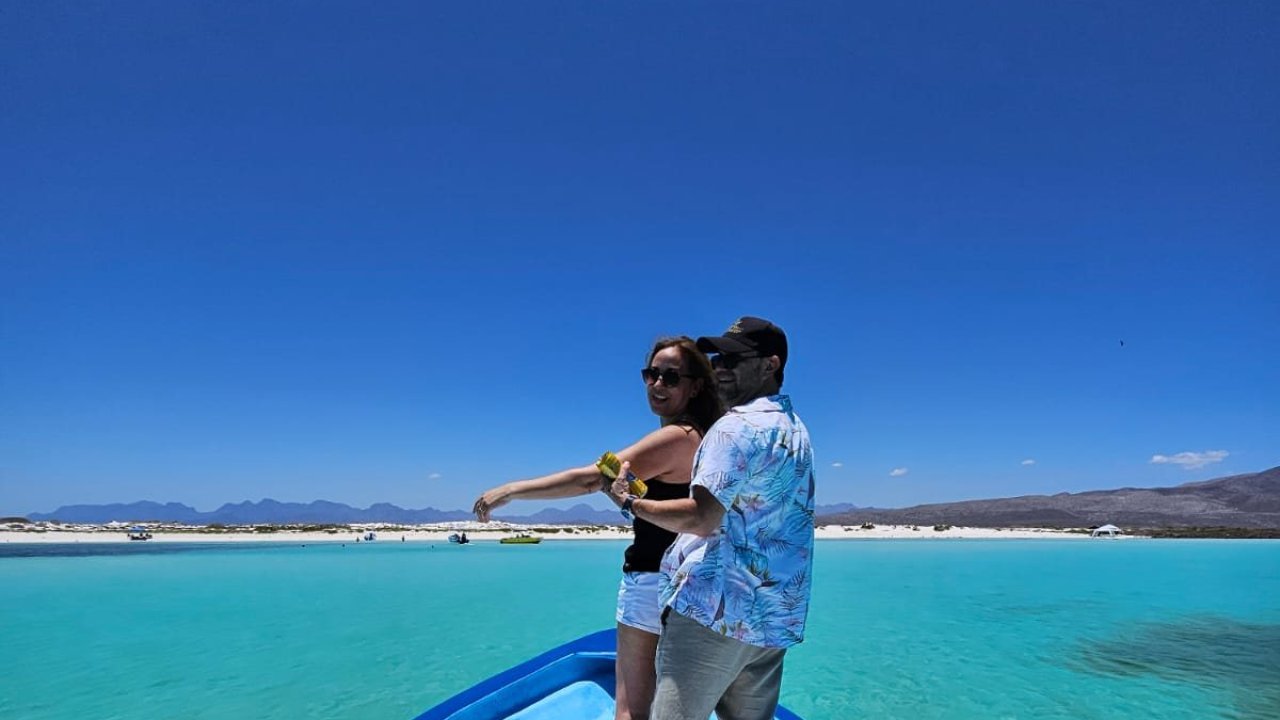
Loreto is a small town with a very big backyard. Behind it rises the Sierra de la Giganta; in front of it lies the Sea of Cortez and the five islands of Loreto Bay National Marine Park, a UNESCO World Heritage site. If you are wondering what to do in Loreto, Baja California Sur, the honest answer is that almost everything worth doing here starts at the marina. This guide ranks the twelve best things to do in Loreto, and we spend most of it on the one that visitors rate highest: a private day on the water. We are Loreto Star Adventures, a local family boat, so we know this part best — but the list is built for a real trip, not a brochure.
1. A Private Boat Day in Loreto Bay National Marine Park
Every list of Loreto tours puts the islands first, and for good reason. Loreto has no beach worth the name in town; the white sand, the sea lions, the whales and the fish are all out on the water, between twenty minutes and an hour from the malecón. A private boat turns that into one continuous day instead of three separate tickets. On Loreto Star, our shaded Baja panga, you book the boat by the hour with a five-hour minimum, and the captain builds the day around your group: an island beach, a snorkel with the sea lions, a line in the water on the way, and, from January to March, blue whales on the way home.
Here is what that day can hold, piece by piece.
Isla Coronado: the classic island tour
Isla Coronado is the volcanic cone you see from town, 20–25 minutes from the marina, and its sheltered south-west side hides the best beach in the park. It is white sand sloping into shallow turquoise water — the safest beach in Loreto for small children and non-swimmers — with the wall of the Sierra de la Giganta as the view. We beach the boat, set up a shade tent, chairs and a cooler with ice, and the beach is yours for as long as you have booked. The island tour is the trip to choose if you only do one boat day in Loreto; read our complete Isla Coronado guide for how we run it.
Snorkeling with the sea lions
A colony of California sea lions lives on the rocks at the north end of Coronado. We anchor off the ledges, you slip in with a mask, and within a minute the juveniles are circling you, blowing bubbles and copying your movements. Twenty minutes in the water with them is the thing people talk about at dinner for the rest of the week. Masks and snorkels are on board if you do not own one; the water is clearest from October to June.
Blue whale watching (January to March)
From mid-January to late March the deep channel between Loreto and the islands is one of the most reliable places on Earth to see a blue whale, the largest animal that has ever lived. Fin whales, humpbacks, dolphins and, some years, orcas share the same water. We leave at first light when the sea is glass, follow the park's distance rules and let the whale set the pace. Five hours covers the whales; six adds a beach stop at Coronado on the way back. Our whale watching page and the blue whale season guide explain the timing month by month.
Sport fishing with a local captain
Loreto was a fishing town long before it was a tourist town. Rods, tackle and bait are on board, and the captain fishes these islands every week, so he knows where the bite is this week rather than last season. Dorado (mahi-mahi) run from June to October, yellowtail from December to April, roosterfish along the beaches in the warm months, and cabrilla and snapper around the islands all year. Most families fish the morning, then swim and eat lunch on an island beach in the afternoon — one trip, not two. See the sport fishing charter page and our Loreto fishing calendar.
Isla Danzante: Honeymoon Cove and the sea arch
Forty to fifty minutes south of the marina, Isla Danzante is the dramatic one: steep red cliffs, a natural sea arch you can idle the boat through, and a string of coves so sheltered they feel like private pools. Honeymoon Cove is the famous one; the snorkeling on the reef inside is some of the best in the park. It works as a five-to-six-hour day on its own or as the second stop on a longer one.
Isla del Carmen: the big, empty island
Isla del Carmen is the large island across the bay, 45–60 minutes away, with long empty beaches, a salt-mine ghost town at Bahía Salinas and a coastline you can explore for hours without seeing another boat. It is a six-to-seven-hour day and the right choice for a second trip, or for people who want the beach entirely to themselves.
What is included, what to bring, how it is priced
The boat comes with a licensed local captain, a full bimini shade top, life jackets in every size (including children's), fishing gear, snorkel masks, bottled water, a cooler full of ice, and the beach set-up of shade tent and chairs. You bring swimwear, a towel, reef-safe sunscreen, a hat, your own lunch and drinks (we keep them cold), and a little cash for the national park bracelet, a small per-person daily fee paid to CONANP. We do not publish a price list: you tell us on WhatsApp how many hours and how many people, and we quote you the same day. Nothing is charged on the website, and if the wind gets up or you simply want to head back early, you can — the five-hour minimum is a booking rule, not a sentence.
Why private, and why a small boat
Loreto has a couple of larger shared tours, and they are fine if you want a fixed timetable. A private panga gives you the opposite: the whale gets as long as it deserves, the kids get an extra half hour with the sea lions, and lunch happens when you are hungry. Six guests is the maximum, which is also why the captain can teach a first-timer to fish and keep an eye on a swimmer at the same time. The best proof is what guests write afterwards; read our reviews on TripAdvisor and on Google, then check the calendar for your dates.
Best time of year for a boat day in Loreto
- January–March: blue whales, yellowtail fishing, cool clear mornings. The busiest season; book early.
- April–June: warm water arrives, the sea is calm, the beaches are quiet. The best all-round island months.
- July–October: hot, but this is dorado season and the water is bath-warm for snorkeling. Go early and be back by mid-afternoon.
- November–December: pleasant, uncrowded, first yellowtail of the winter.
The Rest of the List: 11 More Things to Do in Loreto
Once you have a boat day in the calendar, these are the other things worth your time in and around town. Most take a morning or an afternoon, which is exactly what is left over.
- Walk the malecón at sunrise or sunset. Loreto's waterfront promenade faces the islands and the light on Isla del Carmen at dawn is the town's postcard.
- Visit the Misión de Nuestra Señora de Loreto. Founded in 1697, the first mission of the Californias, with the Museo de las Misiones next door.
- Drive up to Misión San Javier. An hour into the Sierra de la Giganta, a beautifully preserved stone mission of 1758 in an oasis of palms and a 300-year-old olive tree.
- Kayak in the marine park. Loreto is one of the great sea-kayaking destinations in Mexico, from half-day paddles to multi-day island camps.
- Scuba dive the reefs and sea lion colonies. Dive shops in town run to Coronado, Danzante and the deeper walls off Carmen.
- Hike Tabor Canyon near Puerto Escondido. A slot canyon with pools and boulders, best in the cool months.
- Watch the sunrise from the plaza with a coffee. Loreto is a Pueblo Mágico, and its plaza and pedestrian street are where the town actually lives.
- Play golf at Loreto Bay or TPC Danzante Bay. Two courses south of town with the Sierra on one side and the Sea of Cortez on the other.
- See the rock art at Cuevas Pintas. A small pre-Hispanic painting site off the San Javier road.
- Eat chocolate clams and fresh fish. Loreto's almeja chocolata is the local dish; if you fished with us, most restaurants will cook your catch.
- Day-trip to Bahía Concepción and Mulegé. An hour and a half north, some of the most photographed beaches in Baja.
A Sample Three-Day Loreto Itinerary
Day 1: arrive, walk the malecón, mission and plaza in the evening, chocolate clams for dinner. Day 2: full boat day — fish the morning on the way to Isla Coronado, snorkel with the sea lions, lunch on the beach, back by mid-afternoon (in winter, whales first, then the beach). Day 3: San Javier in the morning, a kayak or a second island (Danzante) in the afternoon, sunset on the malecón. If you have a fourth day, Isla del Carmen is the one to add.
Getting to Loreto and Where the Tours Leave From
Loreto International Airport (LTO) is ten minutes south of town, with direct flights from Los Angeles and seasonal service from other US and Canadian cities, plus connections through Tijuana and La Paz. Driving, Loreto sits on Highway 1, about five hours north of La Paz and two hours south of Santa Rosalía. Once you are here you do not need a car for the water: every one of our tours leaves from the Loreto marina on the malecón, a short walk from the plaza and most hotels. Kayak, dive and boat operators are all clustered along the same few blocks, which is why Loreto works so well as a walk-everywhere base.
Tips for a Better Day on the Water
- Start early. The Sea of Cortez is calmest at dawn; afternoon winds are common, especially from November to March. A 7 a.m. departure gives you the glassy hours.
- Bring reef-safe sunscreen and a hat. The islands have no shade of their own; the boat's bimini and our beach tent do the rest.
- Pack your own lunch. There are no services on the islands. The tortas and ceviche shops near the plaza open early and we keep everything cold.
- Carry a few hundred pesos in cash. The park bracelet is paid per person, per day, and there is nowhere to pay by card on an island.
- Say what you want. More fishing, more snorkeling, a longer beach, an earlier return — a private boat can do it, but only if the captain knows.
- Leave a review afterwards. Small local boats live on word of mouth. A few lines on TripAdvisor or Google is how the next family finds us.
Frequently Asked Questions About Things to Do in Loreto
What is Loreto, Mexico best known for?
Loreto Bay National Marine Park and its islands, blue whale watching from January to March, sport fishing, and the 1697 mission that gave the Californias their first town. Loreto is a Pueblo Mágico with its own international airport (LTO).
How many days do you need in Loreto?
Three full days covers the essentials: one on the water, one in town and the missions, one for a second island, a kayak or a hike. Whale season and fishing trips reward a fourth or fifth day.
Are the Loreto islands worth visiting?
They are the reason to come. The beaches, sea lions, reefs and whales are all in the marine park, not in town, and the islands are only reachable by boat.
When is the best time to visit Loreto?
October to May for weather; January to March for blue whales; June to October for dorado fishing and the warmest water. Summer afternoons are very hot, so boat days start early.
Do I need to book a boat tour in Loreto in advance?
In whale season and over holidays, yes — small private boats sell out days ahead. The rest of the year a day or two of notice is usually enough. We confirm availability and quote by WhatsApp.
Is Loreto good for families with small children?
Very. Isla Coronado's beach is shallow and sheltered, the boat is shaded, life jackets come in children's sizes, and the captain sets the pace around the youngest person aboard.
Ready to put the water at the top of your Loreto list? Check availability on Loreto Star or message us on WhatsApp — we reply the same day, in English or Spanish.

